NUSA TENGGARA BARAT, June 23, 2026 – Based on data from the Center for International Forestry Research (CIFOR) cited by WALHI in 2023, Indonesia loses approximately 52,000 hectares of mangrove forests every year. This condition poses a serious challenge because mangroves play a vital role as natural coastal protectors against abrasion, habitats for various marine life, and one of the world's most effective carbon sinks. Therefore, coastal ecosystem restoration efforts are a strategic step toward supporting environmental resilience and sustainable climate change mitigation.
As part of the company's commitment to creating a sustainable social and environmental impact, Telkom Indonesia, through its Corporate Social and Environmental Responsibility (TJSL) program, continues to present various environmental conservation initiatives. Carrying the spirit of "Bersama Jadi Bisa" (Together We Can), Telkom implements coastal ecosystem rehabilitation actions through the BISA Lestari Pillar, which focuses on sustainable environmental preservation and restoration. One of its implementations is the BISA Biru Program, an initiative focused on the protection, rehabilitation, and strengthening of coastal and marine ecosystems through various conservation actions, including mangrove planting, coral reef rehabilitation, and coastal community empowerment. This mangrove planting program in West Nusa Tenggara (NTB) is also part of the sustainability commitment following the Digiland Run 2026 event.
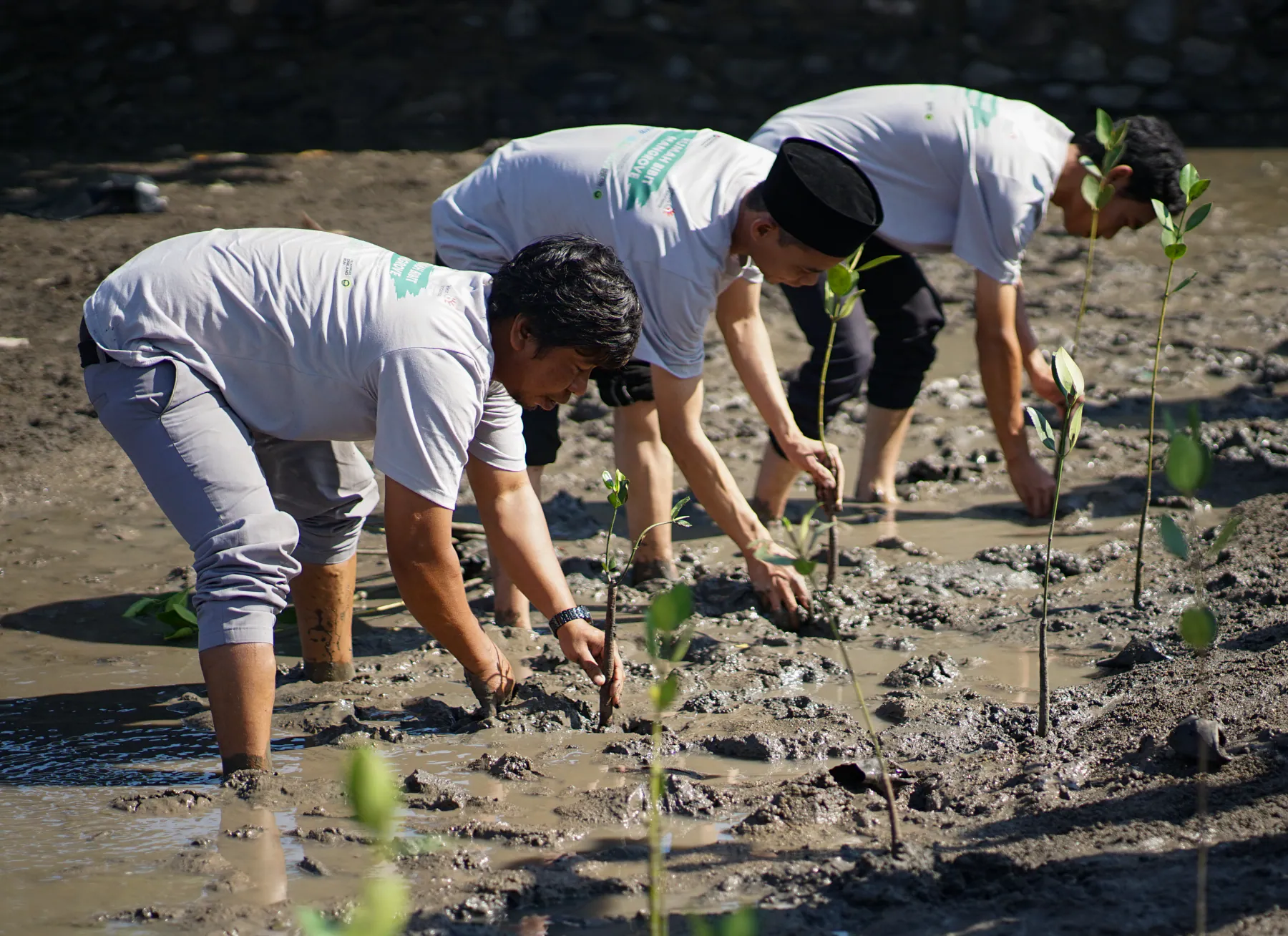
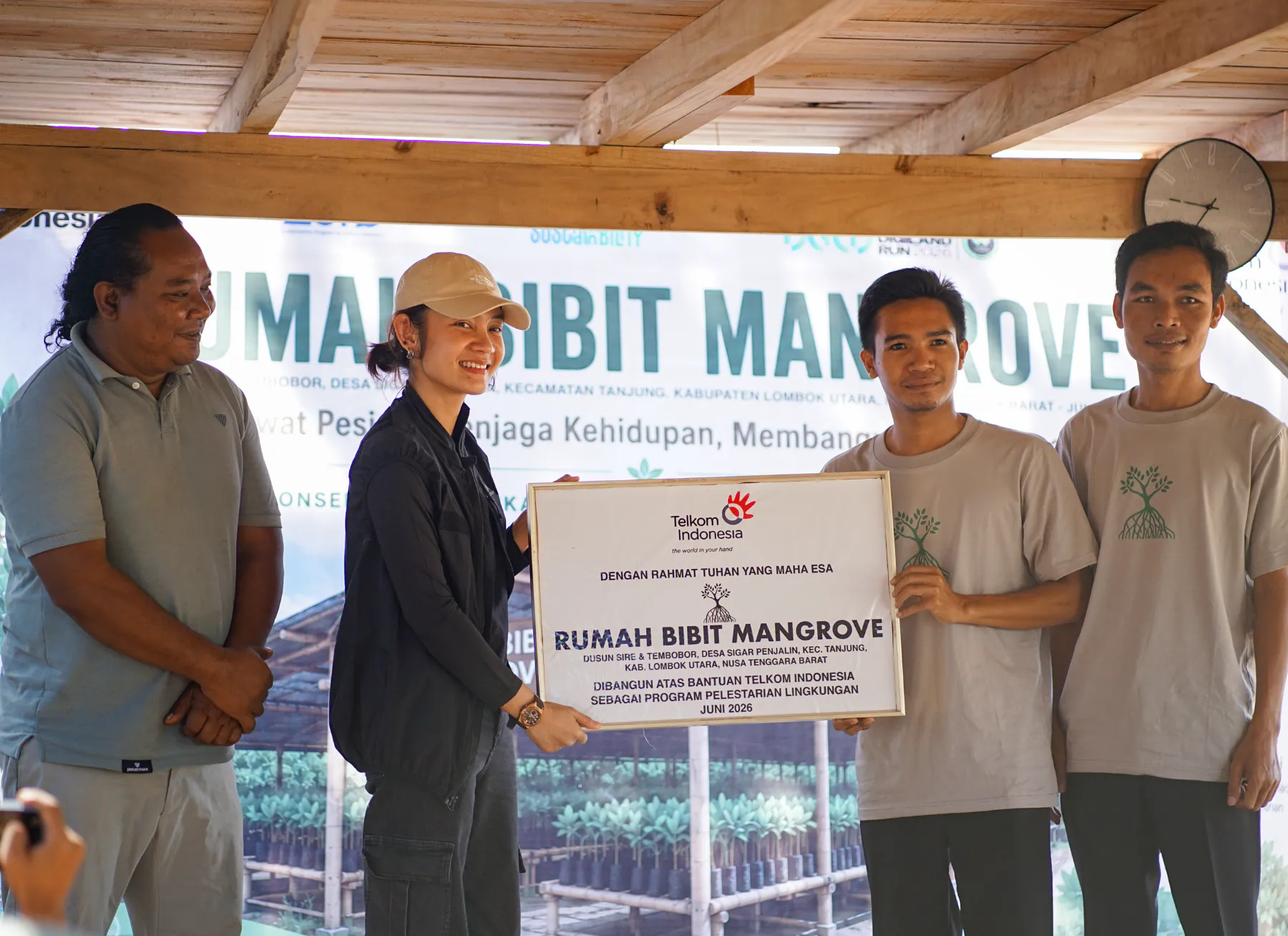
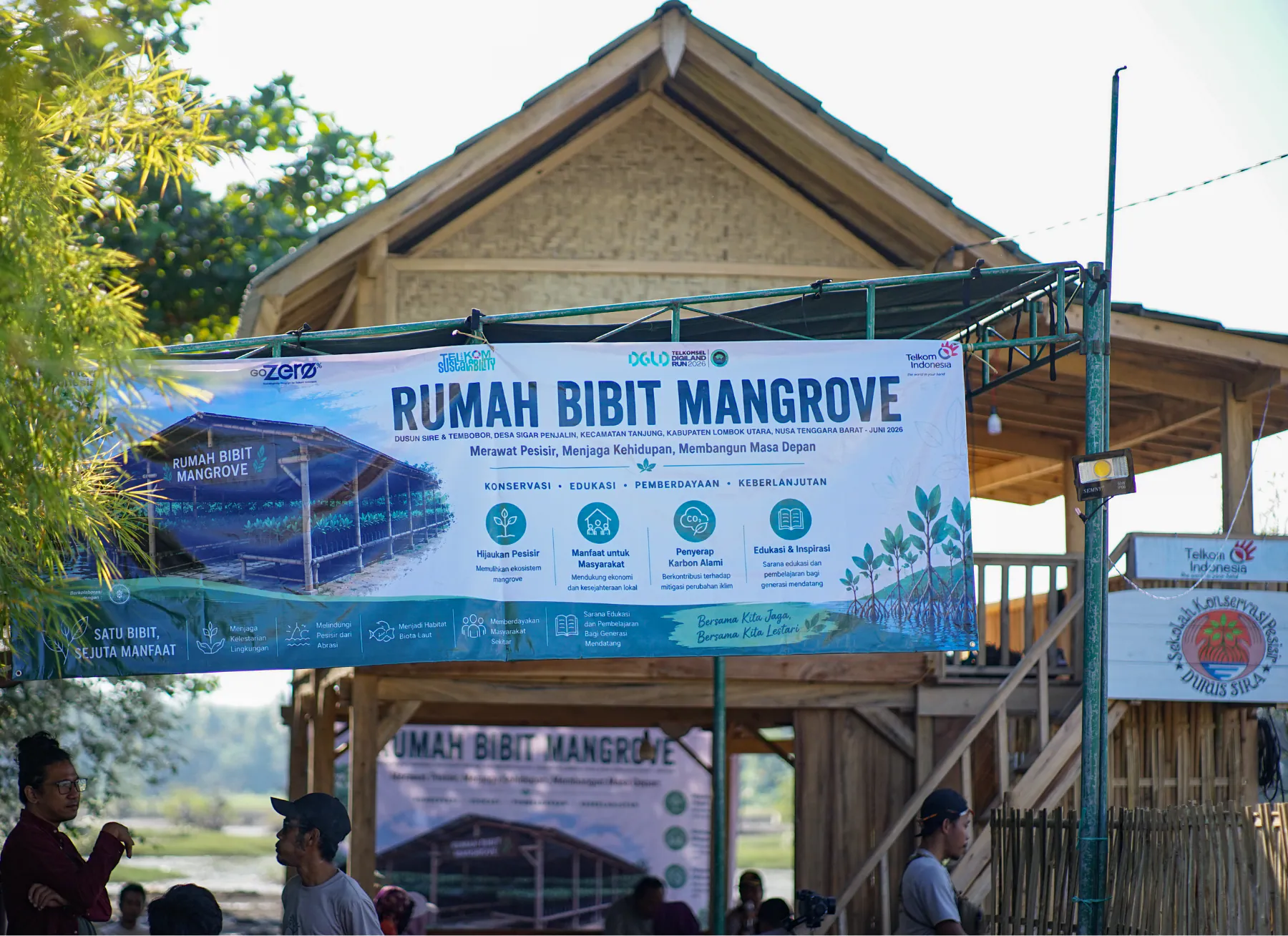
The program, which took place on June 22–23, 2026, in West Nusa Tenggara (NTB), included planting 1,000 mangrove seedlings in coastal areas in need of rehabilitation. To ensure sustainable benefits, Telkom also provided assistance in the form of a mangrove nursery house capable of holding up to 5,000 seedlings. This facility is expected to strengthen the community's capacity to conduct independent nursing while guaranteeing seedling availability to support ongoing coastal ecosystem restoration efforts.
Senior General Manager of Social Responsibility at Telkom Indonesia, Hery Susanto, said, "Sustainability is not only about protecting the environment today, but also ensuring that future generations still have a healthy ecosystem to live and thrive in. Through the provision of a nursery house and mangrove planting in West Nusa Tenggara, Telkom aims to build a collaboration with the community to sustainably safeguard coastal areas. Through the BISA Biru pillar, we strive to deliver ecological benefits alongside economic added value for coastal communities. We believe that with the spirit of 'Bersama Jadi Bisa', every small step taken together will bring a major impact for the earth."
In addition to contributing to coastal ecosystem recovery, this program is part of Telkom's efforts to strengthen collaboration with the community to maintain environmental sustainability through real actions that yield long-term benefits. This approach aligns with the company's commitment to integrating Environmental, Social, and Governance (ESG) considerations into the execution of TJSL programs, ensuring that the resulting benefits are not only felt today but also passed down to future generations.
Through consistent environmental conservation initiatives, Telkom Indonesia continues to strengthen its contribution to sustainable development. This program also supports the achievement of the Sustainable Development Goals (SDGs), particularly SDG 13 (Climate Action) and SDG 14 (Life Below Water), as part of joint efforts to create a greener, more resilient, and sustainable Indonesia.
 Whatsapp
 Facebook
 X
X
 Copy News Link