TARAKAN, June 18, 2026 – As the education sector undergoes rapid digital transformation, the need to utilize Artificial Intelligence (AI) technology is becoming increasingly important for educators. According to data from the Ministry of Basic and Secondary Education (Kemendikdasmen) in 2026, the use of AI to support learning activities in Indonesia rose significantly to 43.98 percent, nearly doubling compared to the previous year, which reached 21.84 percent. Meanwhile, the use of AI for entertainment was recorded at 29.52 percent, as a virtual assistant at work at 13.48 percent, and to support general productivity at 12.37 percent. This data demonstrates that AI has become one of the core technologies driving the transformation of Indonesia's education system.
In response to this development, Telkom Indonesia continues to strengthen the readiness of Indonesian human resources through various technology-based educational initiatives. Carrying the spirit of "Bersama Jadi Bisa" (Together We Can), Telkom presents the BISA PandAI Pillar, which focuses on improving the quality of education and developing digital talent. One of its implementations is the BISA Vokasi Program, designed to enhance digital competence through training, reskilling, and upskilling for educators, students, college students, and prospective digital talent so they are ready to meet industry demands in the digital transformation era.
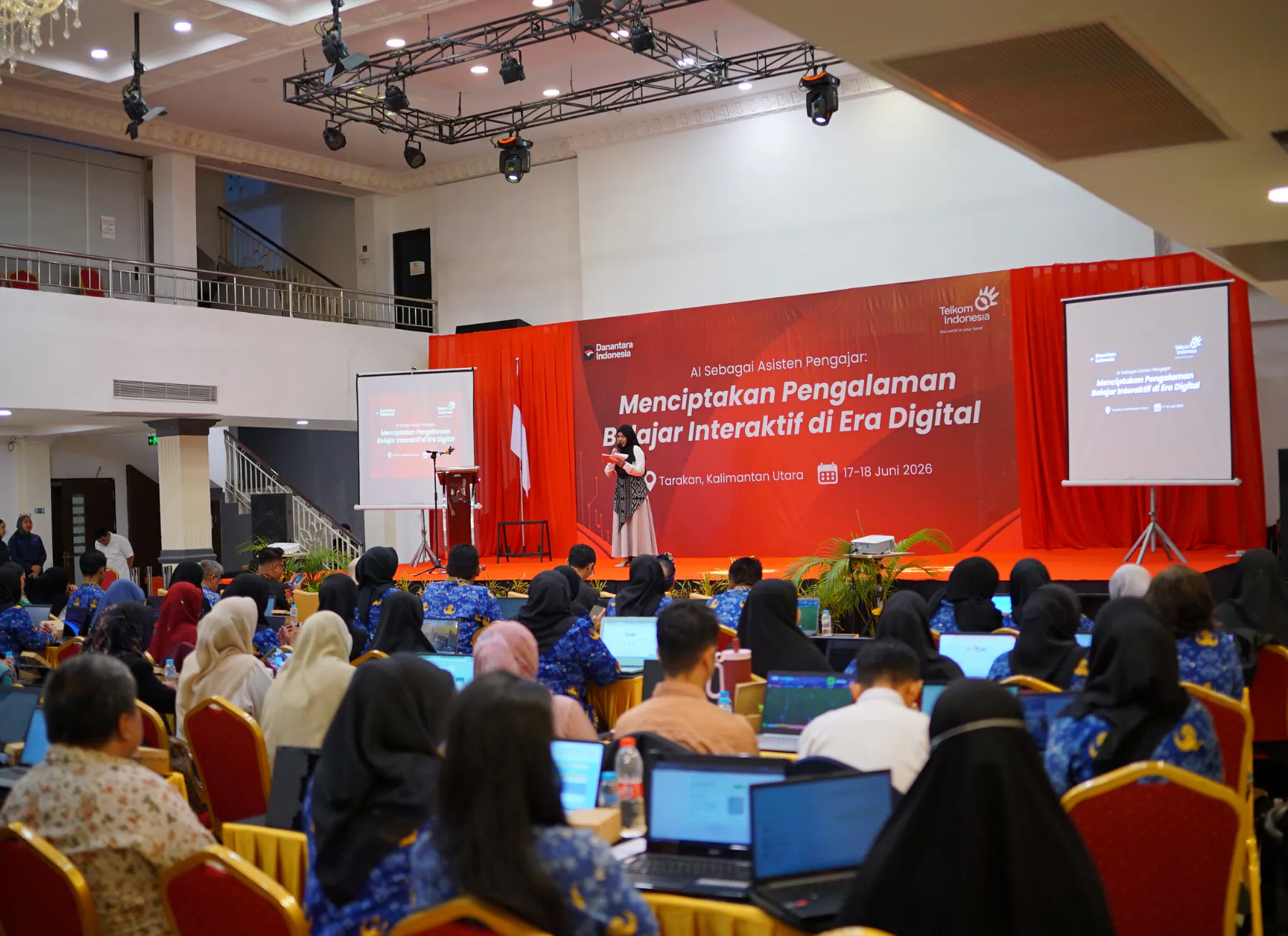
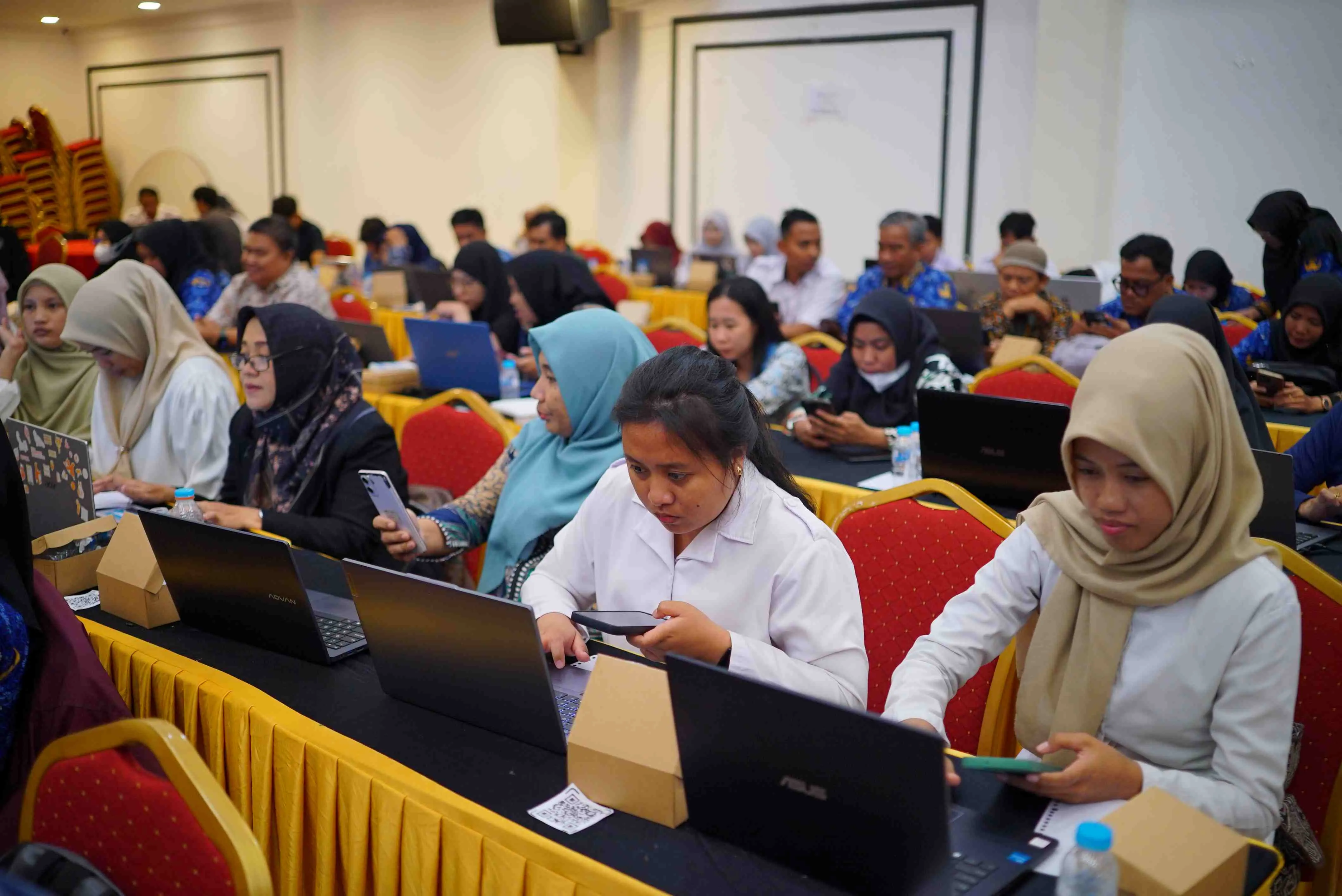
As part of the program's implementation, Telkom organized an AI Training for Teachers in Tarakan on June 17–18, 2026, which was attended by 200 teachers from various educational levels. This program aims to equip educators with the understanding and skills to utilize AI technology wisely, ethically, and practically, enabling them to create more innovative, adaptive, and relevant learning processes for students in the digital era.
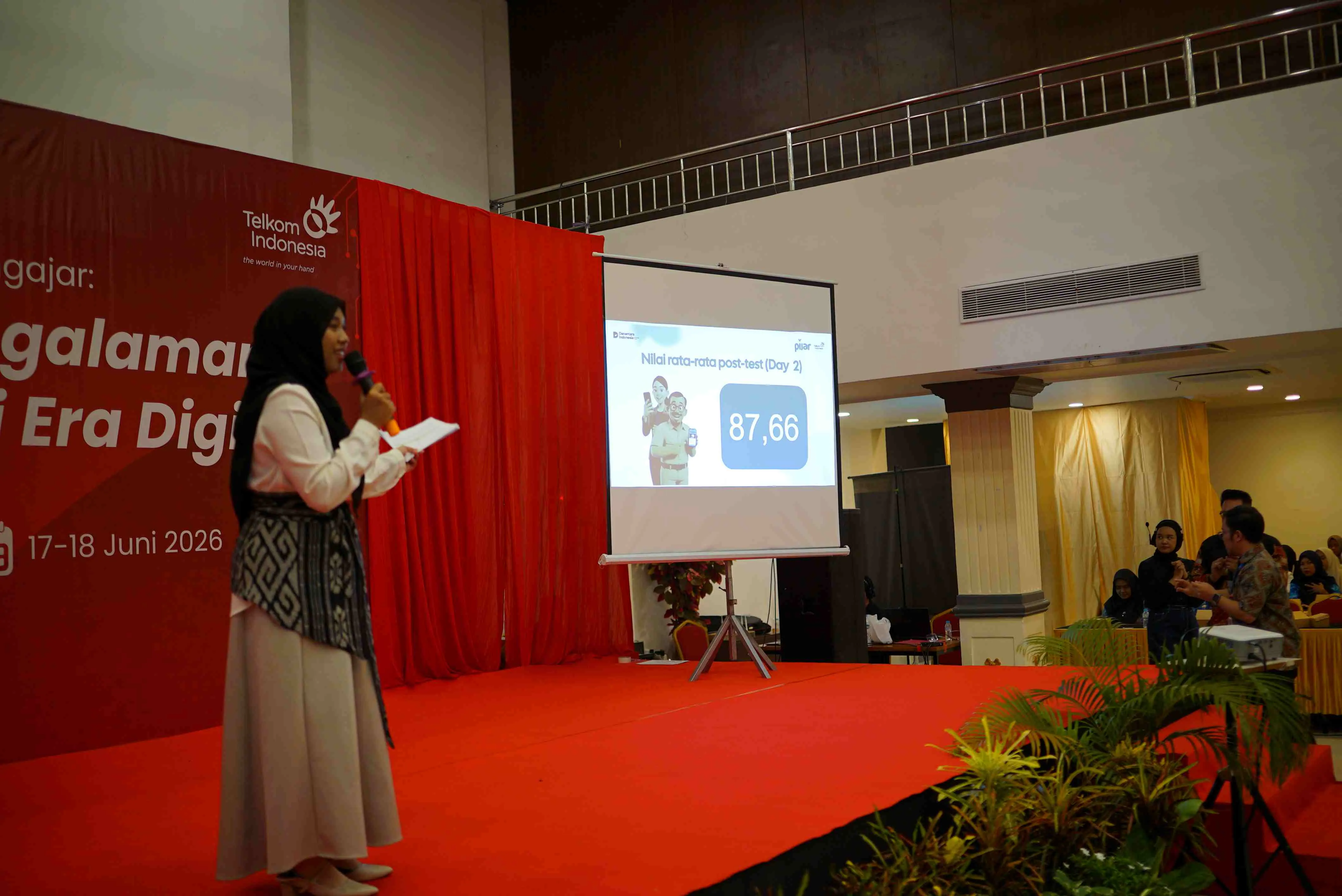
The training was designed comprehensively through three main series of activities: seminars, interactive discussions, and learning assessments. In the seminar sessions, participants received materials on the role of AI in education, ethical use of technology, data security, and effective prompting techniques to support teaching and learning. Meanwhile, the discussion sessions served as a space to share experiences while addressing the challenges and opportunities of implementing AI in school environments. To conclude, participants completed pre- and post-training assessments to measure improvements in competence and evaluate the program's effectiveness.
Senior General Manager of Social Responsibility at Telkom Indonesia, Hery Susanto, said, "As a digital company, Telkom Indonesia believes that technology will deliver maximum benefits when supported by human resources who possess the competence to utilize it. Through the BISA PandAI Pillar and the BISA Vokasi Program, we want to equip educators with relevant digital skills to integrate AI wisely, ethically, and responsibly into the learning process. We believe that technology-adaptive teachers will be the key to nurturing a superior, innovative Indonesian digital generation that is ready to face future challenges."
This program is part of Telkom Indonesia's Corporate Social and Environmental Responsibility (TJSL) implementation to support national education transformation by strengthening the public's digital competence. In line with the company's commitment to creating a sustainable social impact, this initiative also supports the achievement of the Sustainable Development Goals (SDGs), particularly SDG 4 regarding Quality Education. Moving forward, Telkom Indonesia will continue to expand its collaborations and offer a range of digital talent development programs to create an educational ecosystem that is inclusive, innovative, and globally competitive.
 Whatsapp
 Facebook
 X
X
 Copy News Link