Sub Menu
Save Our Planet
Telkom has developed a sustainability and emissions reduction strategy based on six levers of decarbonization. Efforts range from energy savings and equipment modernization through improved lighting efficiency, electrification and EV transition, increased renewable energy storage, utilization of market-based instruments such as RECs/PPAs, carbon credit purchases and NBS initiatives, and collaboration with government efforts to reduce energy consumption and emissions.
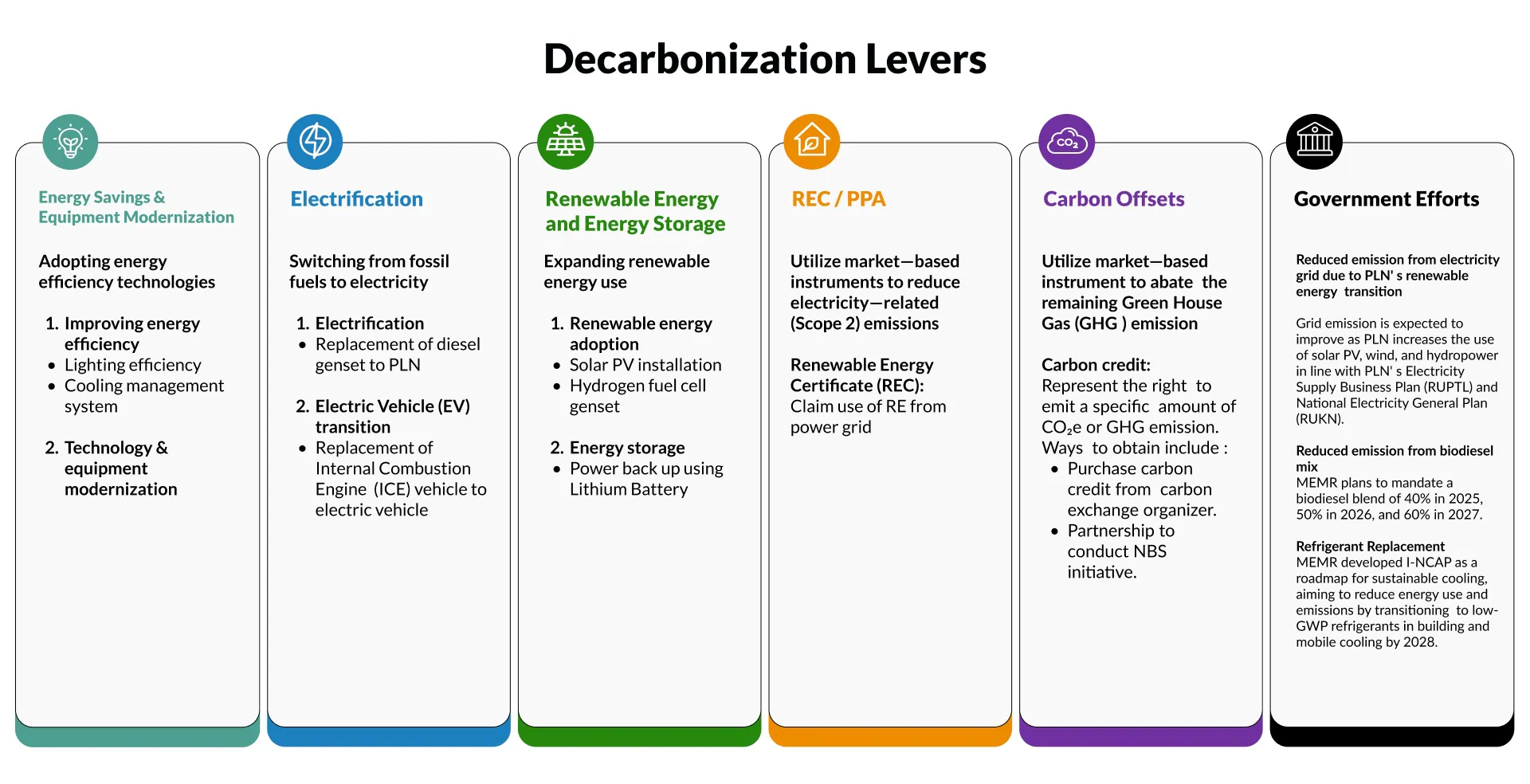
The first step begins with Energy Saving and Equipment Modernization, prioritizing efficiency in lighting and cooling management alongside a comprehensive upgrade of infrastructure technology. These efforts are reinforced by an Electrification strategy aimed at eliminating fossil fuel dependency by replacing diesel generators with grid power and transitioning the operational fleet to Electric Vehicles (EV).
On the resource side, Telkom promotes the adoption of Renewable Energy and Energy Storage through Solar PV installations, the use of hydrogen fuel cells, and the utilization of lithium batteries as eco-friendly backup power systems.
To manage indirect emissions (Scope 2), the company utilizes market-based instruments like REC/PPA, which allow for verified claims of renewable energy usage from the national power grid. For residual emissions that cannot yet be fully eliminated, Telkom implements Carbon Offset schemes by purchasing carbon credits through carbon exchanges and investing in Nature-Based Solutions.
All these strategies are executed in alignment with Government Initiatives, where Telkom fully supports the national green energy transition, the enhancement of biodiesel blends, and the adoption of low-GWP (Global Warming Potential) refrigerants in accordance with the I-NCAP sustainable cooling roadmap.
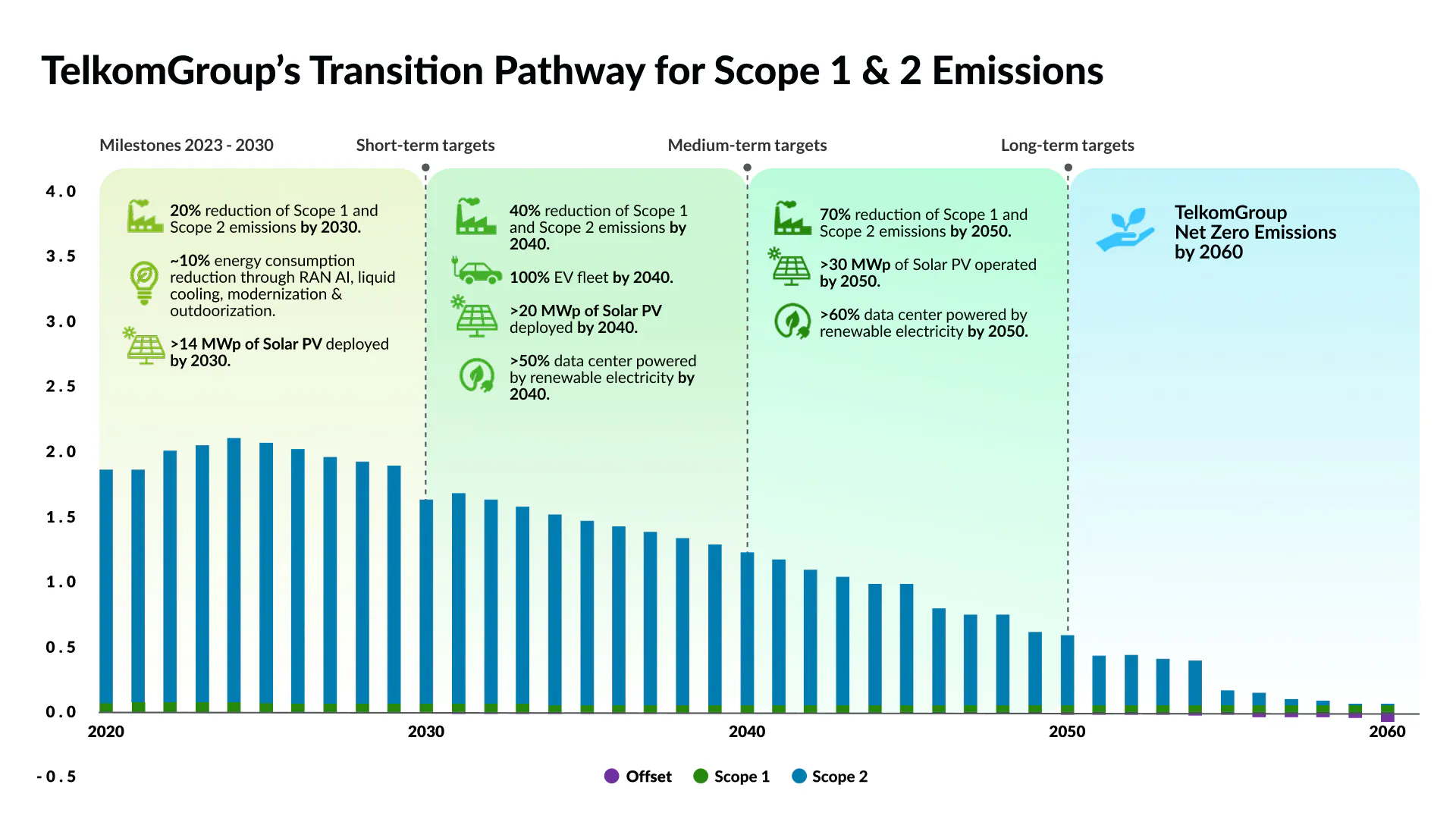
The six levers are translated into a Transition Pathway that outlines TelkomGroup’s journey to reducing Scope 1 and Scope 2 emissions and achieving Net Zero Emissions by 2060. This transition pathway is structured into three timeframes: the short term (2023-2030), the medium term (2030-2050), and the long term (up to 2060).
During the initial period of 2023-2030, Telkom targets up to a 20% reduction in emissions from the baseline through energy efficiency measures and network modernization, including the implementation of RAN AI, liquid cooling, and outdoorization. In this phase, Telkom also begins the development of solar PV installations, with a target capacity exceeding 14 MWp before 2030.
Entering the 2030-2040 period, emission reduction efforts are further strengthened, with a new target of achieving a 40% reduction by 2040. At this stage, Telkom initiates the electrification of its entire operational vehicle fleet, transitioning fully to electric vehicles (EVs). Solar PV capacity is expanded to more than 20 MWp, and over half of the electricity demand of data centers is planned to be sourced from renewable energy.
In the 2040-2050 period, Telkom deepens its commitment with a goal of achieving a 70% reduction in emissions. Solar PV capacity continues to increase to more than 30 MWp, while data centers powered by renewable electricity are expected to exceed 60%.
By 2060, Telkom aims to reach a state of net-zero emissions, meaning the remaining emissions will be minimal and fully offset. Consistent execution of this Transition Pathway underscores Telkom’s commitment to supporting sustainable development goals and achieving Net Zero Emissions by 2060.
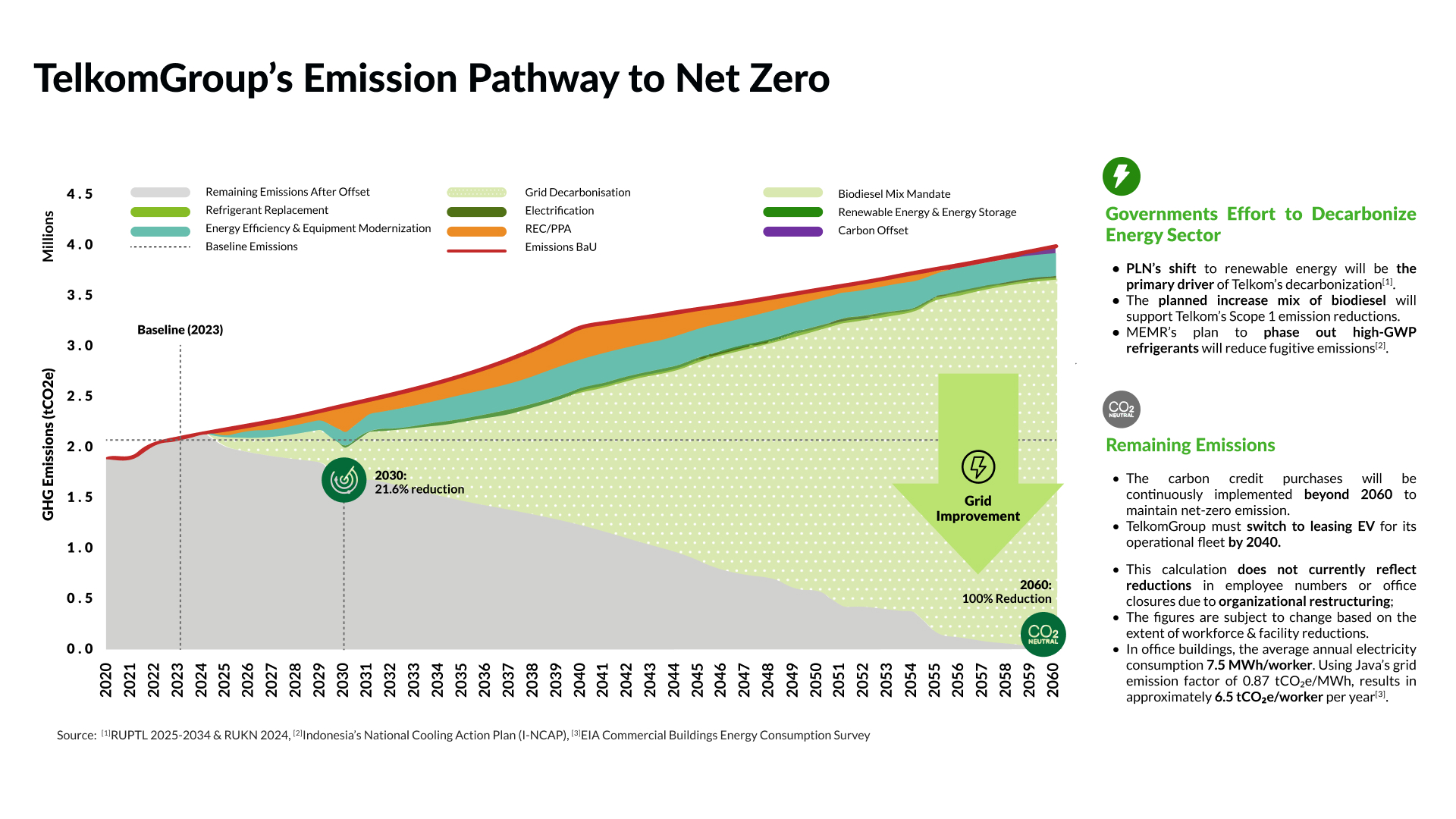
Aligned with the Transition Pathway, the graphic above illustrates TelkomGroup’s Emission Pathway toward achieving Net Zero Emissions by 2060.
The rising red line represents the business-as-usual (BaU) scenario, while the shaded area below it shows the contribution of Telkom’s various decarbonization initiatives in reducing Greenhouse Gas (GHG) emissions. Starting from a baseline of around 2 million tCO?e in 2023, the initial reduction up to 2030 is driven by energy efficiency efforts, the replacement of high-GWP refrigerants, and the utilization of solar PV.
Entering the 2030–2050 period, emission reductions become more significant in line with the decarbonization of the national grid, where PLN’s cleaner energy mix plays a major role in lowering Telkom’s electricity-related emissions. At the same time, the electrification of operational fleets becomes mandatory, with a target for all vehicles to transition to EVs before 2040. The combination of renewable energy (RE), REC/PPA mechanisms, and building efficiency further strengthens the reduction in emissions.
Toward 2060, all these initiatives lead TelkomGroup to achieve a 100% reduction in emissions, with carbon offsets used only for residual emissions that cannot be technically eliminated. These residual emissions will continue to be managed even beyond 2060 to maintain net-zero status. The graphic underscores TelkomGroup’s commitment to a comprehensive decarbonization journey driven by technology, government policy, and sustainable operational transformation.
TelkomGroup recognizes that the telecommunications industry is increasingly exposed to climate change challenges, particularly due to its heavy reliance on energy-intensive infrastructure such as telecom networks, base transceiver stations (BTS), and data centers. Climate-related risks—including flooding, extreme rainfall, and rising temperatures—are considered to have the potential to affect operational resilience and service continuity. Therefore, TelkomGroup has integrated climate change management into its corporate sustainability governance through the Sustainability Committee and the Climate Change and Energy Management Working Group. Climate management is carried out using an identify, assess, respond, and monitor framework to systematically identify climate-related risks and opportunities, evaluate their impacts on the business, develop mitigation and adaptation strategies, and monitor progress against targets on a regular basis.
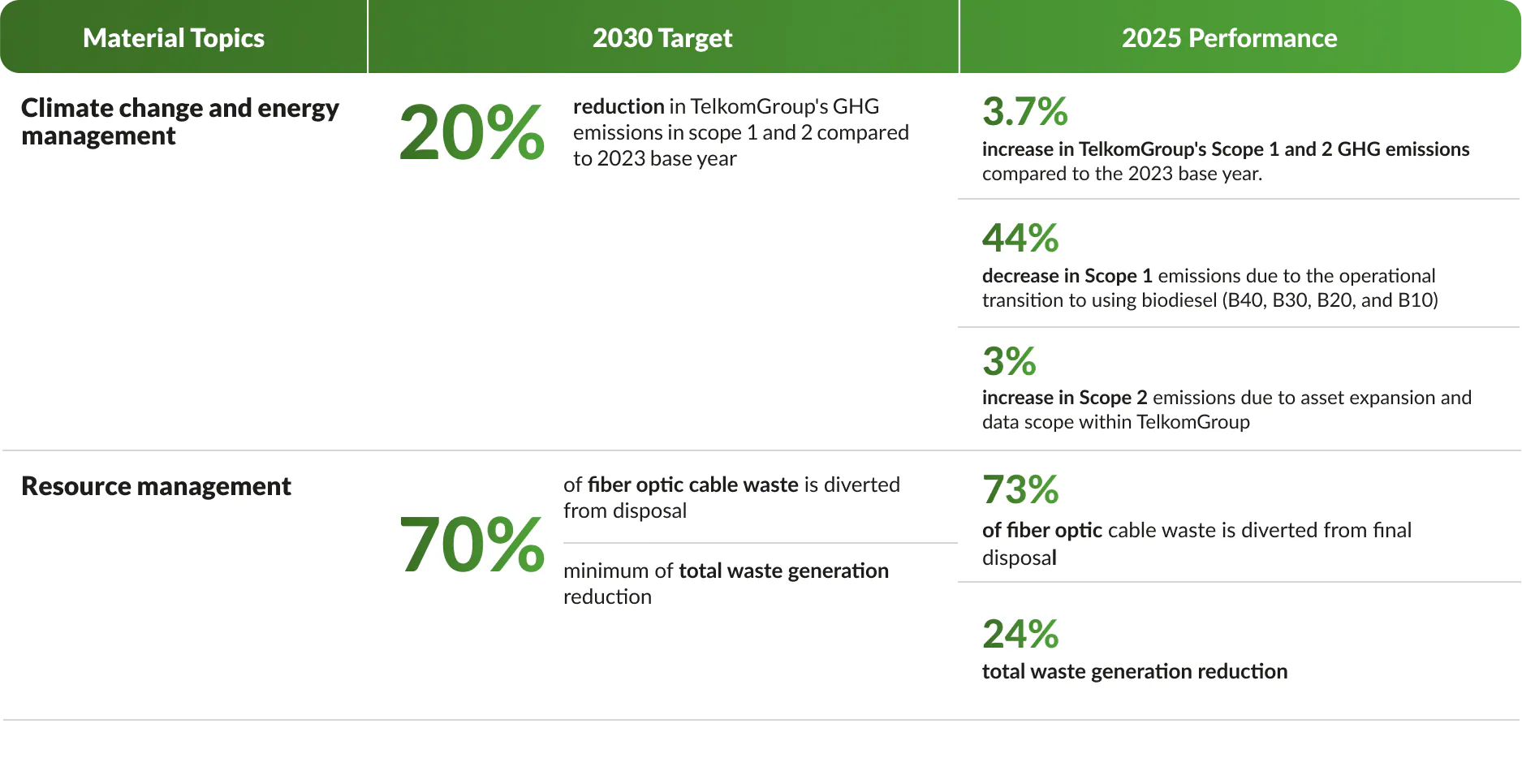
As part of its low-carbon transition strategy, TelkomGroup launched its Climate Transition Plan in 2025 as a strategic roadmap toward low-carbon operations and the achievement of net zero emissions by 2060. Telkom has set a target to reduce Scope 1 and Scope 2 greenhouse gas (GHG) emissions by 20% by 2030, compared to the 2023 baseline. In 2025, TelkomGroup’s total GHG emissions reached 4,153,661.3 tCO2e (market-based), comprising 1% Scope 1, 52% Scope 2, and 47% Scope 3 emissions. A 45% reduction in Scope 1 emissions was achieved through the use of biodiesel blends (B40, B30, B20, and B10), while Scope 2 emissions increased by 6% due to asset expansion and the growing operational scope of data centers.
TelkomGroup’s commitment to energy efficiency is reflected in various modernization and energy-saving initiatives. One of the key programs is the implementation of the Integrated Smart Device for Advancing Energy Efficiency (iSave), an Internet of Things (IoT)-based system that enables real-time monitoring and control of building electricity consumption. In addition, Telkom has been implementing the Gerakan Peduli Efisiensi Energi (GePEE) program since 2023 to encourage collective energy-saving efforts across the organization. Other efficiency measures include the modernization of energy-efficient equipment, the adoption of more efficient cooling systems, the implementation of hybrid technology in BTS operations, and the development of greener data centers.
To support the transition to clean energy, TelkomGroup is also expanding the use of renewable energy through the installation of solar photovoltaic (PV) systems at operational facilities and data centers, with a target capacity of more than 14 MWp by 2030. Furthermore, the company aims for more than 50% of its data centers to be powered by renewable energy by 2040 and for 100% of its operational vehicle fleet to transition to electric vehicles by the same year. Telkom is also implementing independent and hybrid energy solutions at BTS sites to reduce reliance on the power grid, particularly in areas vulnerable to extreme weather disruptions.
As a telecommunications service provider, TelkomGroup’s operations rely heavily on network infrastructure and data centers, which require the use of various resources. These activities inevitably generate waste that must be managed responsibly to minimize operational impacts while creating long-term sustainability value for the business, stakeholders, and the environment.
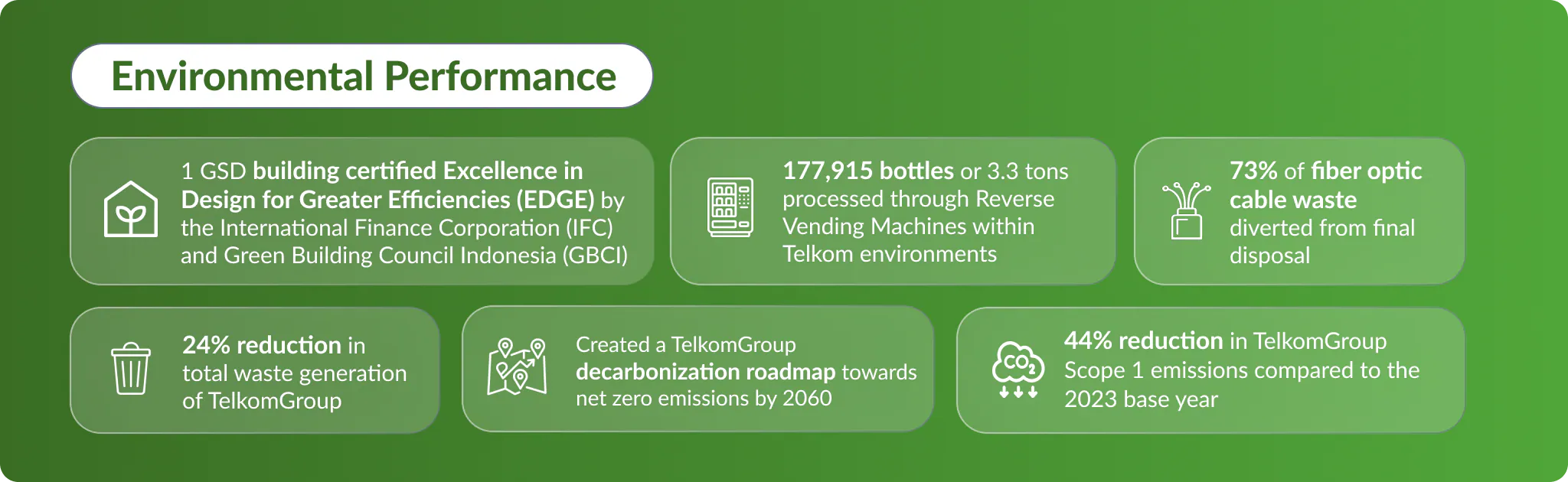
In 2025, the total waste generated by TelkomGroup reached 41,157.5 tons, consisting of both hazardous and non-hazardous waste. One of the key priorities in waste management is electronic waste, including fiber optic cable waste. As of 2025, TIF successfully diverted 166.9 tons of fiber optic cable waste from final disposal, equivalent to approximately 73% of the total cable waste managed.
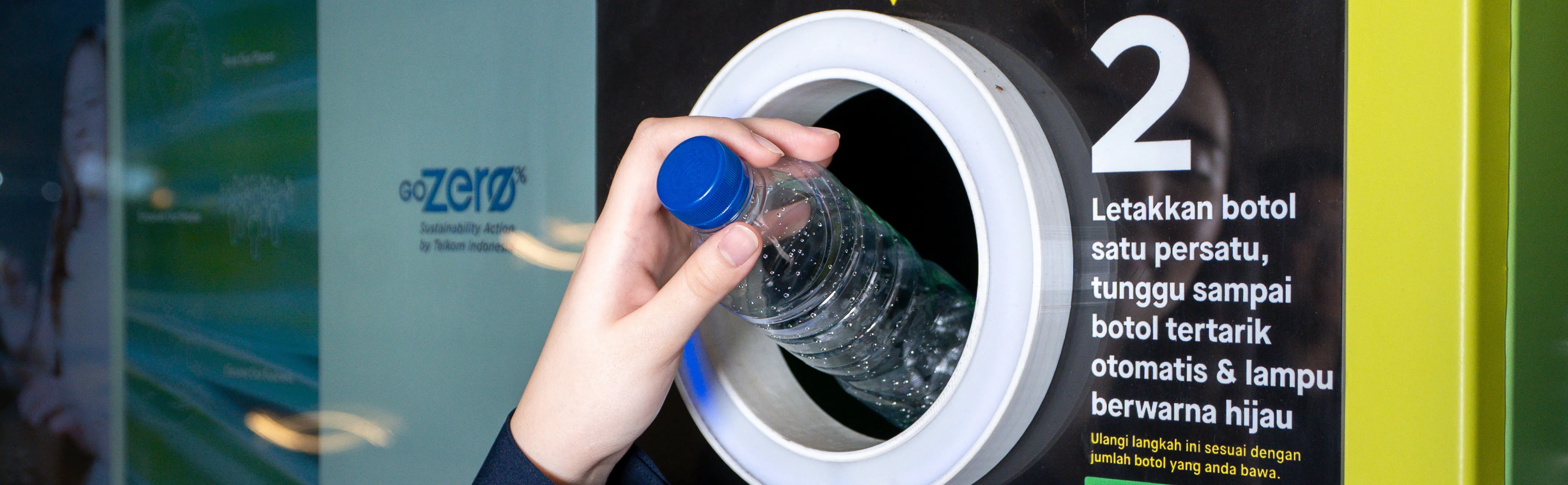
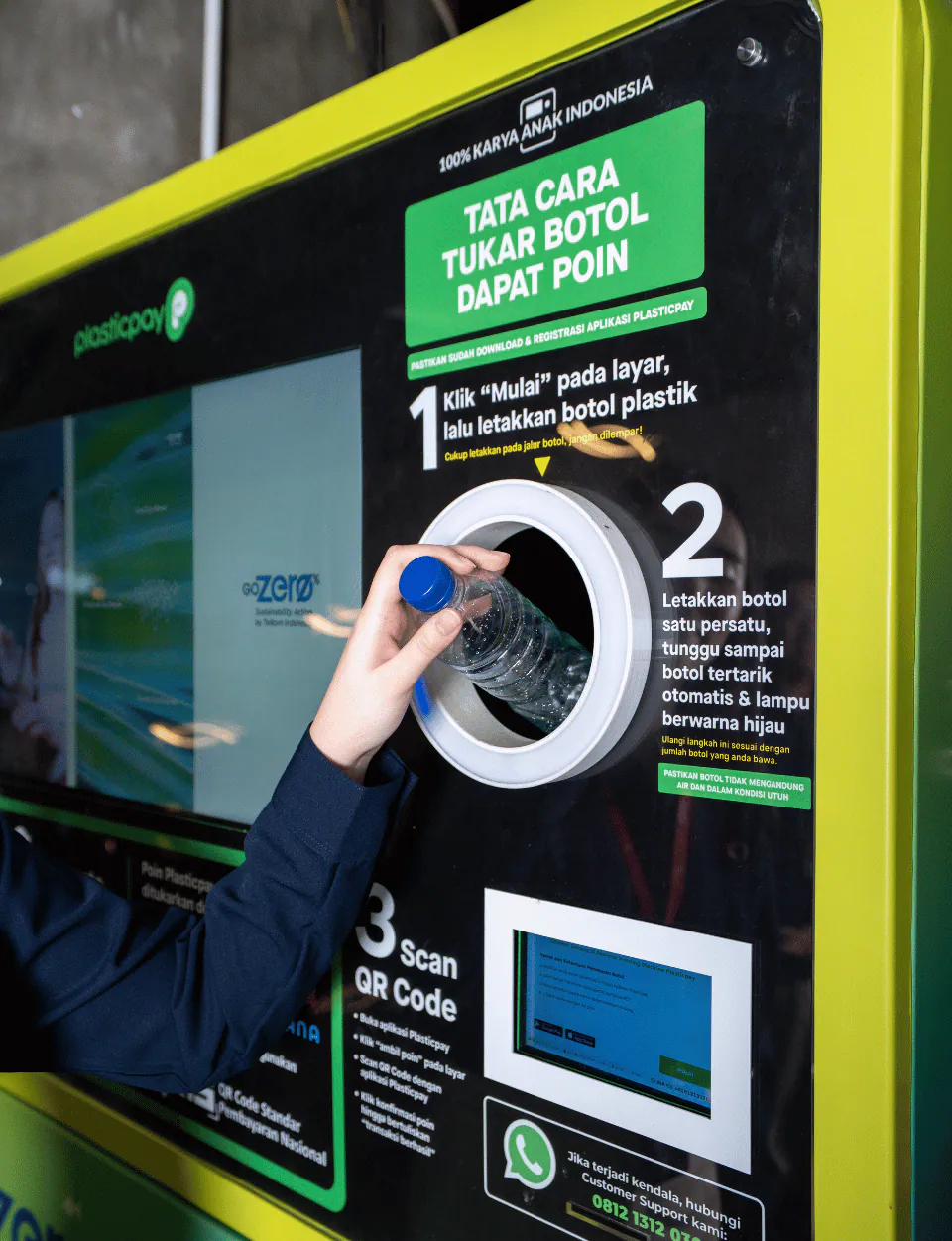
Telkom also continues to promote digitalization through the implementation of digital memos, virtual meetings, document-sharing systems, online surveys, and IT-based HR services to reduce paper consumption. In addition, TelkomGroup implements electronic waste management programs through initiatives such as Eduvice, the use of environmentally friendly packaging, and the provision of Reverse Vending Machines (RVMs) to support the sustainable application of a circular economy.
TelkomGroup proactively manages water resources by mapping scarcity risks using the WRI’s AQUEDUCT Tool, identifying 12.9% of its operational areas are in the category of extremely high-water stress, while the other 29.9% are in the category of high-water stress. With a total third-party water withdrawal of 3,728 ML in 2025, the company ensures environmental sustainability by operating Sewage Treatment Plant (STP) facilities at major buildings, adhering to Ministry of Environment and Forestry (KemenLHK) standards. Furthermore, the Telkom Hub office complex has adopted circularity principles through wastewater recycling management. Specifically at the TLT Building, treated wastewater from the STP and condensation from Air Handling Units (AHU) are repurposed for cooling systems and landscape irrigation.
Beyond operations, Telkom contributes to SDG 6 by expanding access to clean water and proper sanitation in infrastructure-limited areas. Collaborating with local governments and partners, Telkom builds boreholes, water treatment plants, and sanitation facilities (MCK), while providing hygiene education. In 2025, this initiative was successfully implemented across 99 locations in 17 provinces, benefiting over 58,501 individuals.
Additionally, TelkomGroup is committed to biodiversity preservation through pentahelix collaborations focused on ecosystem restoration and community empowerment. By 2025, the company has planted 80,800 trees across 8.1 hectares in various "Hutan Binaan Digital," achieving a 70% survival rate. To ensure transparent monitoring, Telkom utilizes WebGIS (Telkom Green Digital) technology to provide public access to spatial visualizations of conservation areas.
In marine ecosystems, Telkom has planted 110,042 mangroves and seagrasses, and transplanted 780 coral reef substrates. This initiative also involves comprehensive carbon stock measurements in collaboration with Telkom University, following the SNI 7725:2019 standard.